As hospitals face strain, a look at what the legislature passed—and didn’t—this spring
ST. PAUL, Minn. (GRAY) – As the 2026 Minnesota legislative session drew to an end, lawmakers passed a flurry of legislation just before they gaveled out. The quick burst of bills in the final weekend was thanks to a bipartisan agreement reached by legislative leadership several days before they were set to adjourn.
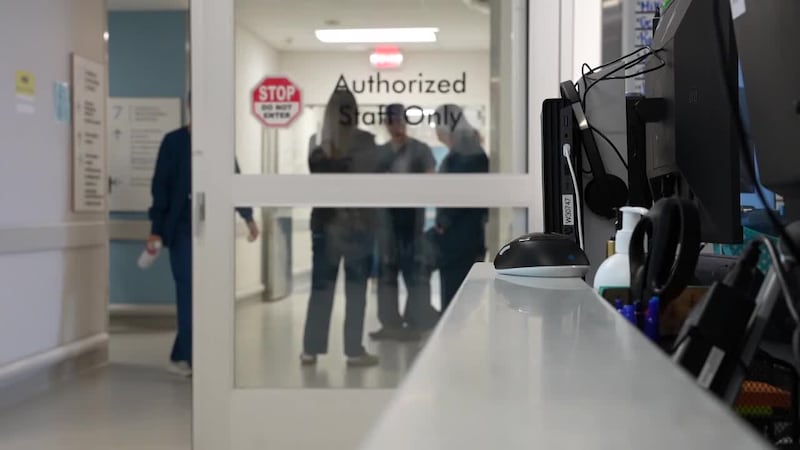
Perhaps the most pressing bill to come out of the final push was a bill to rescue the Hennepin County Medical Center, or HCMC, from an impending financial crisis. While HCMC is located in the Twin Cities, it serves trauma patients from all over the state. The bill, now signed into law, sets aside $205 million in funding for HCMC.
On top of the rescue funds, lawmakers also created a hospital stabilization reserve fund of $500 million. While that fund is theoretically available to other hospitals in the state, its eligibility is worded such that it will likely only be accessible to HCMC if it continues to need financial assistance in the future.
Other hospitals, according to House Health Finance and Policy Committee Co-Chairs Robert Bierman (DFL-Apple Valley) and Jeff Backer (R-Browns Valley), are eligible for a smaller fund, also set up in this year’s legislative session.
“There was a $30-million fund that is more geared toward other hospitals, other than HCMC,” Bierman said. “But the parameters on that are pretty tight.”
The legislature also passed a bill to raise Medical assistance rates, another policy that’ll give hospitals a small boost.
While the co-chairs are pleased with the work they did to save HCMC, they recognize that more needs to be done.
“We did accomplish [the HCMC bill], I think in a way that’s meaningful,” Bierman said. “For other hospitals, we didn’t do as much as we could have.”
Hospitals across Minnesota, particularly in rural parts of the state, say they continue to face mounting financial pressure. The main driver, according to those hospitals, is uncompensated care.
“We still have a lot of work to do, because at the end of the day, 75% to 95%, depending on which hospital, is paid by a government payout, especially in rural Minnesota,” Backer said.
Uncompensated care costs come from services provided by hospitals and other providers that go unpaid, often due to poor or nonexistent insurance coverage.
The two parties are aligned in looking for ways to aid providers, but they blame the cause on different issues.
“HR1 is, as I said in the [House] Ways and Means Committee, it’s injurious, wasteful and a misguided policy that we need to change,” Bierman said.
Bierman says that the federal reconciliation bill, passed last summer, has only worsened the existing strain of uncompensated care. DFLers broadly feel that new eligibility requirements and expired tax credits have driven up costs for hospitals.
Backer feels that other factors, like new paid leave requirements, are also a factor in the financial strain facing many healthcare centers.
“There are things that are out there,” he said. “Will any one of those things be the lifeblood for our hospitals? No, just like hospitals are facing strains for multiple reasons.”
Both Backer and Bierman, regardless of their differences in opinion, emphasized the work that hospitals do and the need to provide a helping hand in the near future.
“Did we do perfect work? No, we did good work, and we have a lot more work to do with EMS and hospitals in rural Minnesota, and I’m still committed to that,” Backer said.
“This is where we ended up this year. You don’t serve or solve such an incredibly complex long-term issue, like health care, in one term,” Bierman said.
Another bill that hospitals across the state rallied in support of was a bill to strengthen 340B protections. The federal 340B program requires pharmaceutical companies to sell prescriptions at a discounted price for patients, and according to hospitals, helps hospitals maintain their bottom line.
The 340B bill failed to reach a vote on the House Floor despite bipartisan interest. Both Bierman and Backer say the bill got tied up with House leadership, though Bierman feels it was Republican leadership that stopped the bill from reaching a vote, while Backer feels it was due to an impasse on both sides.
Copyright 2026 KTTC. All rights reserved.